
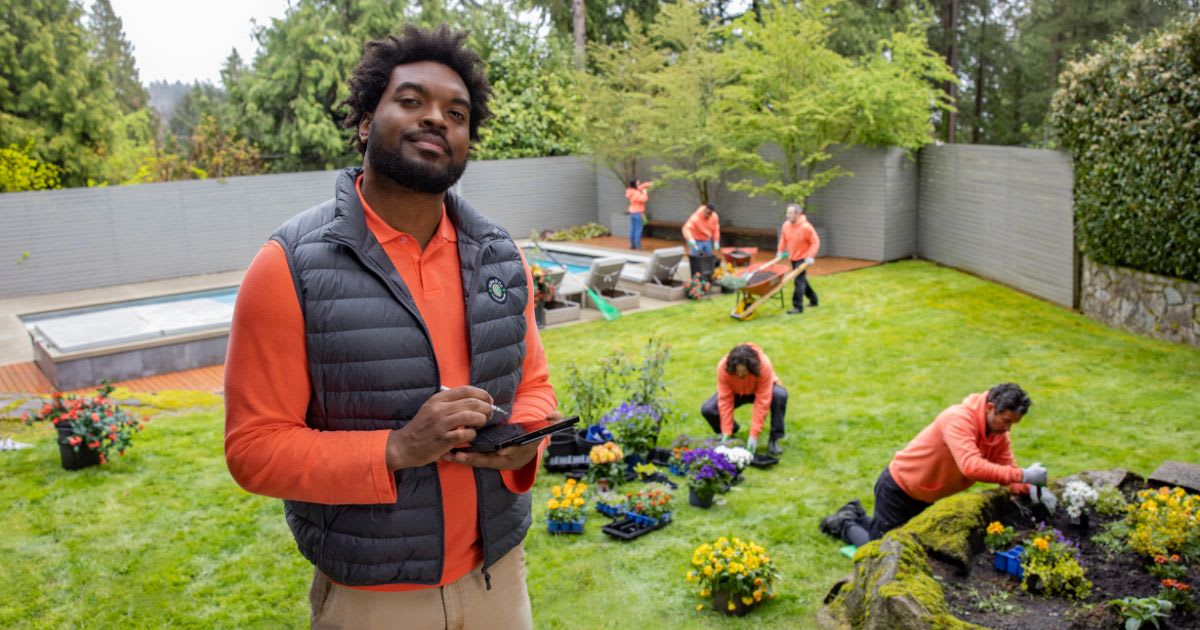


To start a landscaping business, start by deciding which services you will provide, conducting market research, reviewing local licensing requirements, and creating a thorough business plan, pricing plan, and budget. You’ll also need to choose a business structure (limited liability company or C-Corp, for example), register as required, buy applicable business insurance, purchase any necessary equipment, and hire employees. Then, you’ll be ready to market services, find clients, and establish a schedule for completing jobs.
The services you decide to provide will shape your equipment, hiring, training, and licensing needs. For example, mowing and trimming require different responsibilities than applying pesticides. Requirements often vary depending on where you operate your business.
This guide walks you through key considerations you should make when starting your landscaping business, from licensing and insurance to equipment and ongoing maintenance.
How much does it cost to start a landscaping business?
The typical startup costs range between $5,000 and $50,000 to start a landscaping company, but actual costs depend on the services offered, plus equipment, transportation, and hiring needs. Research local needs and costs thoroughly when determining your budget. The following business models/service mix show how different business structures can affect your planning.
Basic lawn care: Focusing on lawn mowing, trimming, seasonal cleanup, and other lawn care services can limit equipment needs and reduce upfront costs. But it can make it difficult to differentiate from competitors.
Landscaping services and installation: Planting, grading, irrigation systems, landscape design, or hardscaping usually requires special tools, more complex transportation needs, and hiring people with specialized skills. You’ll also need a larger reserve budget for purchasing materials (plants, mulch, pavers, etc.) before the customer pays.
Compare new and used equipment costs, and evaluate whether buying used saves you in the long run. Used equipment may cost less initially but require more frequent repairs. Consider delivery, attachments, and any financing costs when comparing quotes.
Beyond equipment, budget for business registration, licensing, training, insurance, marketing, and administrative tools. Also consider hiring costs, including bookkeeping and payroll services.
Finally, determine the savings reserve you’ll need for repairs, delayed payments, and slower months.
Which Licenses, Permits, and Certifications Do You Need
Licensing requirements for a landscaping business depend on your location and services. Check with your city or county and confirm the exact requirements applicable to your business plan. You may encounter the following:
General business licenses: You may need an operating license or other local permit depending on your location. Registering your business may not be enough.
Pesticide applicator certification: Federal rules require certification for restricted-use pesticide applications, and many states extend certification requirements to other commercial applications. Your business may also need a separate pesticide operator license.
Contractor or specialty license: Check the required license classification, project-value thresholds, and exemptions. Installing irrigation, grading land, or building patios and retaining walls may require contractor licensing and project permits.
For example, California requires a contractor license for landscape construction projects totaling $1,000 or more in labor and materials, or when the project requires a permit or additional workers, but not for routine gardening and maintenance. Oregon generally requires licensing for landscape construction, including planting lawns and installing irrigation. It exempts routine maintenance, such as mowing and edging.
How to Start a Landscaping Business
Use this checklist to help you write your lawn care and landscaping business plan, organize yourself, and launch your landscaping business.
1. Decide which services to offer (mowing lawns vs. chemical application vs. hardscaping)
Research the landscaping industry and local environment and choose services that match your skills, budget, and local demand. You might start with limited, easier-to-offer services, then expand into more specialized work. Put this in your business plan.
2. Choose a business structure and register with your state
Compare business structures (sole proprietorship vs LLC, for example) based on ownership, taxes, liability, and administrative costs. Working with a tax advisor is a great idea. Then complete applicable registrations, filings, and licensing requirements.
3. Get an EIN
If you need an EIN (for example, if you have employees), apply for one directly through the IRS for free. If you’re forming an LLC or corporation, register it first. It’s also generally a good idea to get a separate business bank account under your business name to organize income and expenses.
4. Get a pesticide applicator certification if you'll apply chemicals
Contact your state regulator before offering weed control or other pesticide applications. Ask about and confirm any certification or registration requirements.
5. Get general liability insurance, commercial auto insurance, and workers’ comp
Work with an experienced independent insurance agent to ensure you get the coverage needed for your equipment, vehicles, crew, clients, and liability protection.
6. Buy core equipment (mower, trimmer, trailer, truck)
If needed, purchase mowers, trimmers, leaf blowers, rakes, shovels, hand tools, and protective gear. Arrange for suitable transportation, such as a truck or trailer. Consider renting equipment for specialized jobs. Factor in the cost of warranties and equipment maintenance.
7. Set your pricing and service packages
Set prices to cover labor (including your time), materials, travel, equipment upkeep and replacement, disposal, overhead, and profit. Define what’s included in packages, compare with local rates, and track actual costs to improve estimates.
8. Market locally and build recurring business
Create a Google Business Profile with accurate services, hours, and coverage areas. If customers don’t visit your business address, hide it and list your service area instead. You can reach nearby customers through referrals (hand out business cards to make this easy), door hangers, flyers, and a website showing your work.
9. Plan for the off-season
During the downtime of winter months, consider offering snow removal services, winter pruning, spring powerwashing (driveways, walkways), holiday decorating, and anything else you uncover in your market research.
Frequently Asked Questions
Below, we answered the most common questions people ask about starting a landscaping business.
Do I need a license to start a landscaping business?
You may need a local business license, a state contractor license, or both for a landscaping or lawn care business, depending on your location and services. Routine mowing and edging may qualify for exemptions from landscape contractor licensing, while planting, irrigation, and construction can require additional credentials. Confirm requirements with your state licensing board and city or county before taking jobs.
Do I need a pesticide license to spray weeds for customers?
Often, yes, even when you use products available at retail stores. Many states require licensing for commercial applications of general-use pesticides. Massachusetts, for example, requires an applicator license to apply general-use pesticides to someone else’s property for hire. Check with your state’s pesticide regulator before offering weed treatments.
How much should I charge for lawn and landscaping work?
Build your price around labor, materials, equipment, travel, disposal, and a share of overhead, then include profit. Compare local rates and adjust estimates for property size, access, condition, and service frequency. Track actual job costs to check whether you’re making the profit you expect.

